





WHO IS JEFFREY TAN, THE PASTRY CHEF COMING TO THESSALONIKI?
THE LA LISTE AWARD-WINNING PASTRY CHEF IS COMING TO Cooking Workshop Pro
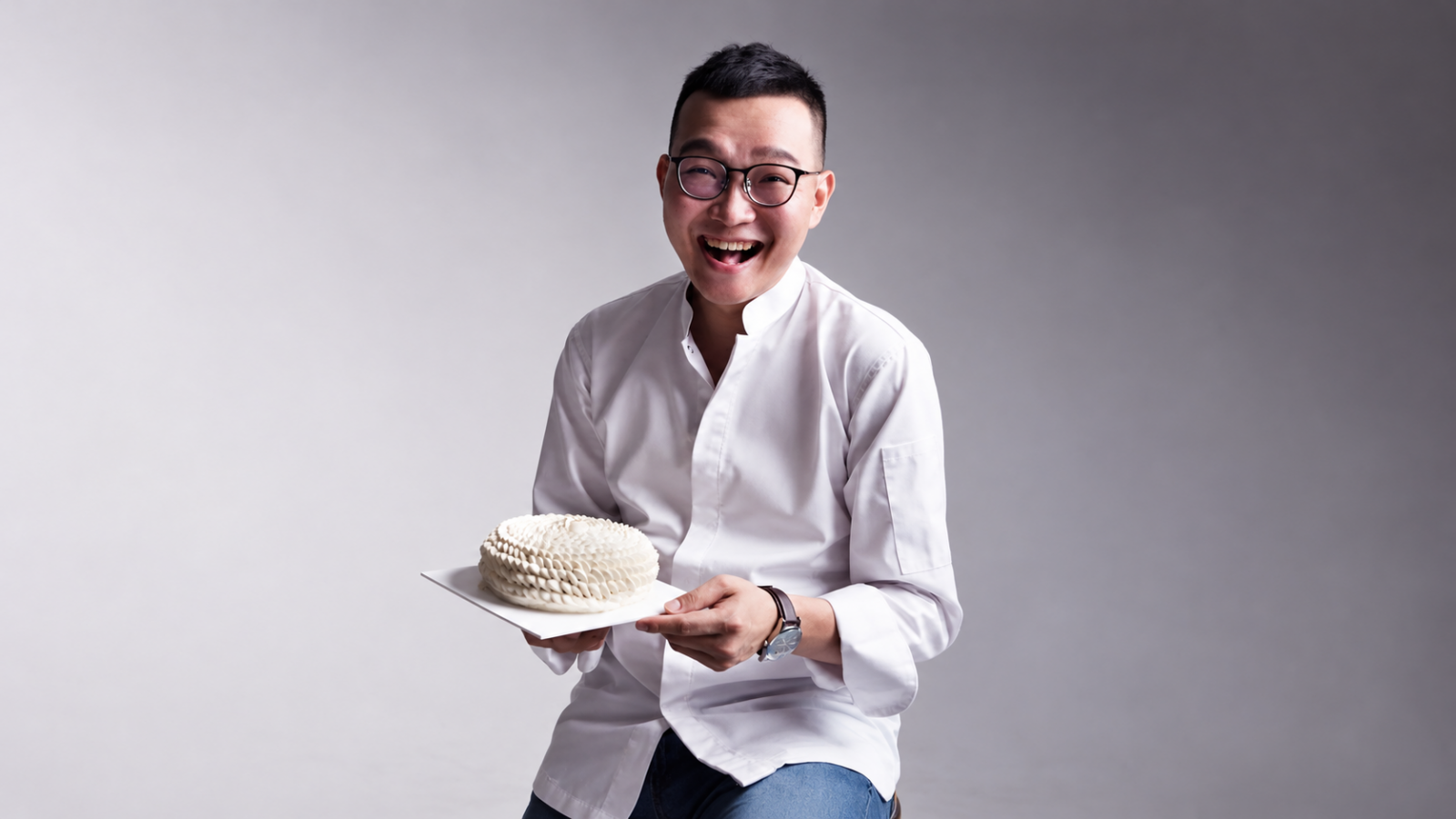
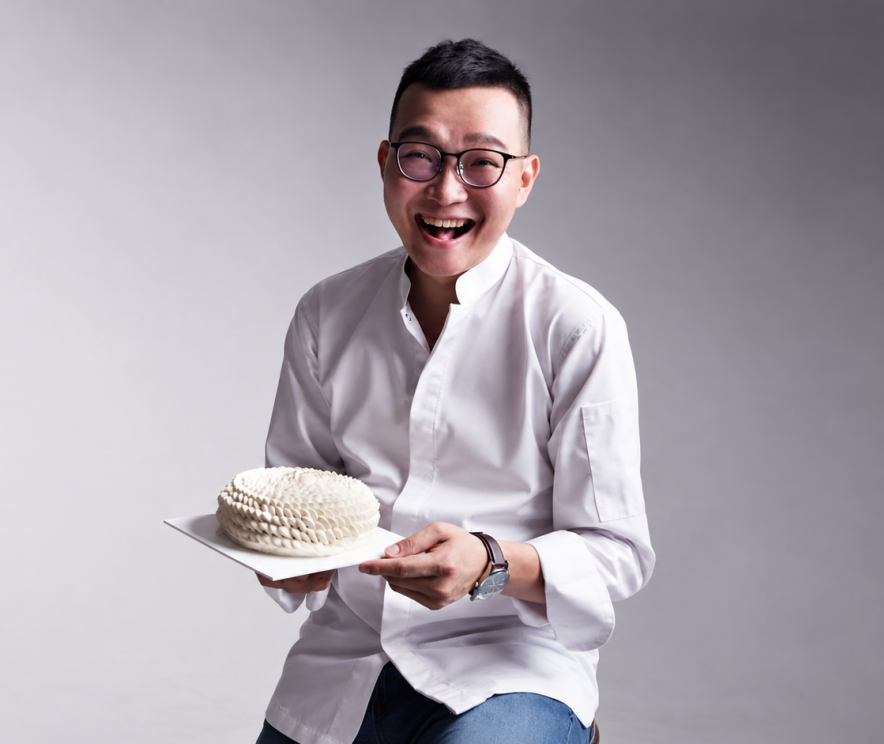
One of the five pastry chefs honoured internationally with La Liste’s Pastry Talent of the Year Award 2026 is coming to Thessaloniki to share his creative approach. Jeffrey Tan, founder of JT Pâtisserie in Penang, Malaysia, will be at Cooking Workshop Pro on 2 and 3 November for the two-day “Modern Asian–European Pâtisserie” masterclass. For the city’s professionals and students, this is a special opportunity to learn directly from a chef recognised in this year’s international La Liste awards: to observe his techniques, understand his decisions and taste his creations.
His story, however, first takes us to a thin pancake with crisp edges, salted butter and roasted peanuts. When Jeffrey Tan returns to the flavour that left its mark on him as a child in Penang, he can still remember the excitement of that first bite. Today, after fifteen years in pâtisserie, he seeks the same balance in his own creations. Ahead of his visit, he spoke to FineBeing about finding his own voice, the dessert we want without too much sweetness, and what he hopes participants will take back to their kitchens. Let's get to know him.
How does a childhood memory find its way into a contemporary dessert?
To get to know the founder of JT Pâtisserie, Jeffrey Tan, it is worth starting with Apam Balik, also known as Ban Jian Kuih (a pronunciation challenge — we feel you). It is the dessert he immediately chooses when we ask which food memory from his childhood remains most vivid.
His description makes your mouth water, with the precision of someone who has revisited the pleasure of that bite many times. First comes the batter: thin, fragrant with egg and flour, and cooked until its edges turn golden and crisp. Then comes white or brown sugar, followed by the juicy sweetness of corn. Melted salted butter adds a full, rich flavour and a touch of salt, while crushed roasted peanuts bring aroma and crunch.
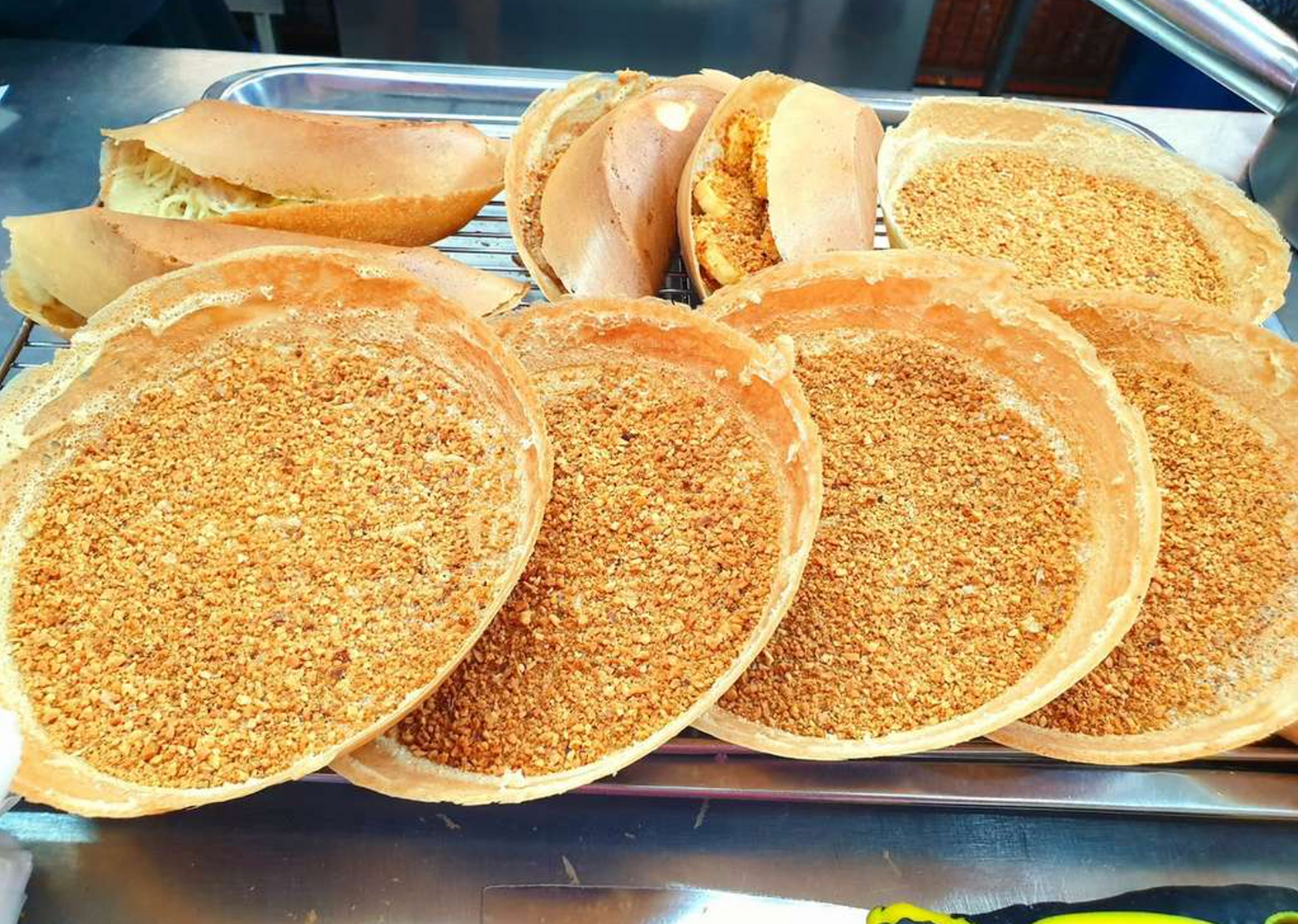
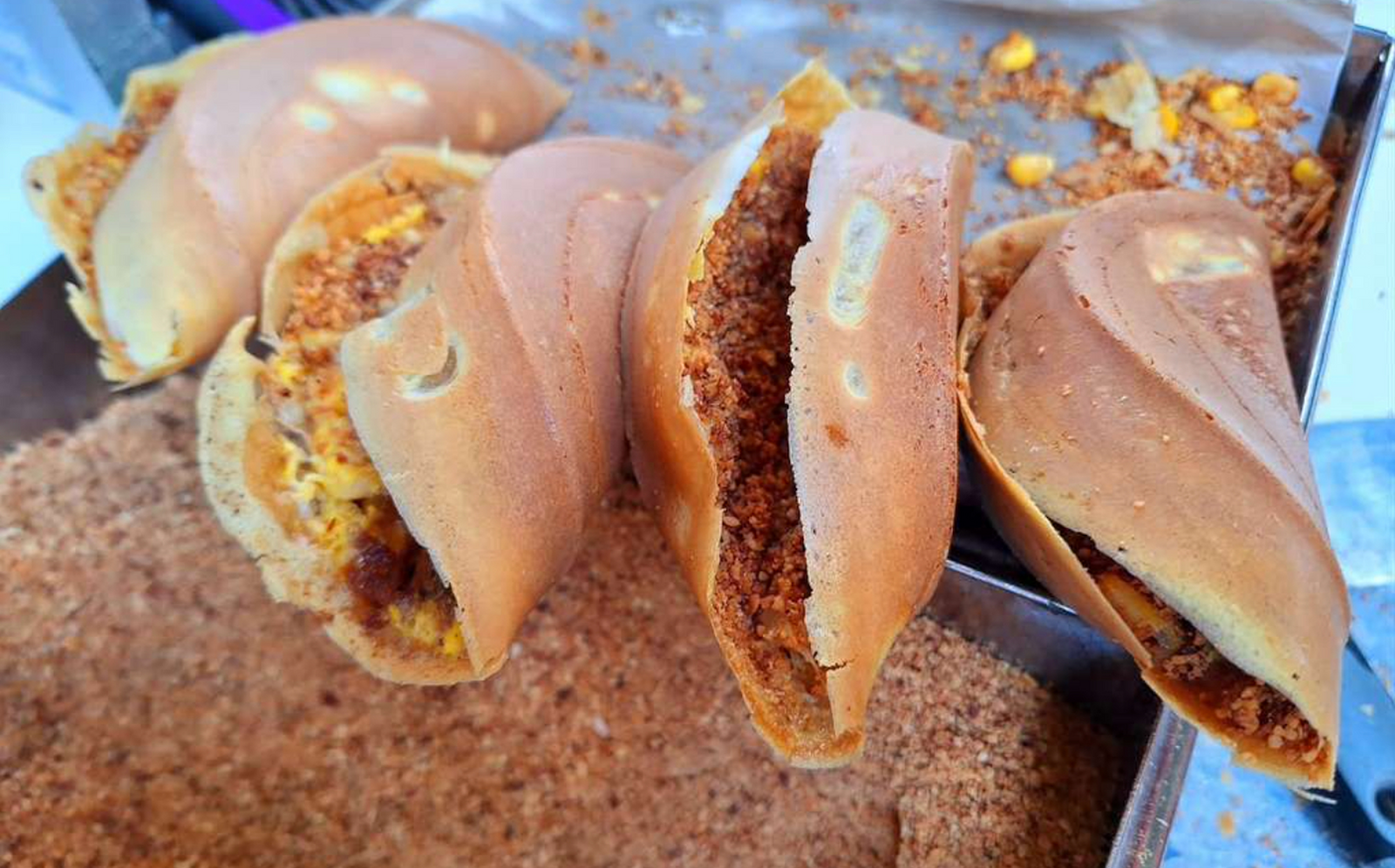
What still moves him is the harmony between these elements. Sweet, salty, creamy and crunchy sensations arrive together, with each ingredient retaining its character. In his creations today, that memory lives on in salted pralines, silky creams, vibrant fruit gels and airy sponges. The presentation belongs to contemporary pâtisserie, yet he clearly recognises the starting point of his thinking: layers of texture, the balance between nuts and salt, and the sense of comfort a dessert can give you.
Memory acts as an internal reference point. It helps him decide what a composition needs and what feeling he wants to leave with the person tasting it.
When did his technique acquire a signature of its own?
His personal direction developed through years of practice. At first, he tells us, he was devoted to learning classic French and European flavour combinations. He wanted to master the foundations and execute what he was learning with precision. Six or seven years into his career, one question began to occupy him more deeply: how could someone recognise his own distinctive identity in a dessert?
Inspiration came from observing how Japanese pastry chefs approached the Opéra cake. The famous French dessert, traditionally built around coffee, chocolate and almond, took on a different character through matcha. An ingredient rooted in their own culture found its place within a recognisable French structure.
Tan saw a possibility that spoke directly to him. He could work with Southeast Asian ingredients using the French techniques he had studied. The flavours of his heritage could shape the substance of his creations.
When we ask him to recall when this idea first took form, he singles out two desserts he created around nine years ago.
Read also: Matcha: Japan’s Green Tea Powder and Its Place in Pâtisserie
The two creations that helped him find his voice
In the first, the local kedondong fruit, which he also calls umbra, met chocolate, Earl Grey tea and a subtle touch of whisky. He describes the fruit’s acidity as vibrant, with herbaceous notes. He was interested in how it could sit alongside the richness of chocolate and the aromas of the other ingredients. For him, the combination had a recognisable connection to home. It was a creation that allowed him to express familiar flavours through the skills he had developed professionally.
The second was Petit Blanc. As he describes it in our interview, it combined coconut cream, fresh lime zest and pineapple, layered over almond dacquoise and a crisp base. Tropical sweetness, acidity and contrasting textures gave form to the same exploration.
Through these creations, he began to recognise a language of his own. His choice of ingredients had a personal purpose, while technique served a specific intention for the flavour.
That is also what makes his forthcoming appearance at CWC PRO so interesting:
The opportunity to follow how a chef moves from an idea to a combination of ingredients, and from there to the structure of a complete dessert.
What does a customer mean when they ask for a dessert “that isn’t sweet”?
Tan recalls with humour something he often heard at the beginning of his career. Customers would ask him for dessert while explaining that they did not want it to be sweet. Back then, he wondered how he could meet such a request.
Over the years, that phrase began to make more sense. Through studying food science, the hydrocolloids used to control texture, and the behaviour of ingredients, he began to work more consciously with the perception of sweetness.
In the first spoonful, he wants clear flavours and distinct textures to come through. Fruit should retain its vibrancy, nuts their aroma, and cream its own mouthfeel. He is equally interested, however, in what happens next: what is the experience of the third or fourth bite, once the initial excitement has passed?
This is where he identifies the challenge of very rich compositions. A dessert may impress at first and gradually become tiring. He aims to sustain the desire to keep eating until the end.
He even talks about the seconds after the final spoonful. He wants the finish to remain clean, without the heavy sensation that excessive sweetness can leave behind. It is a personal criterion by which he assesses his work: how someone feels after finishing the dessert, and whether they would want to return to it.
This attention to the way a tasting experience unfolds has direct relevance for professionals. It encourages you to consider the portion as a whole, the proportions and the intensity of each element, alongs
“Before you even start touching ingredients, you need to ask yourself three fundamental questions: Who are you? What is your cultural background and culinary history? And most importantly—who are you serving?”
The final question carries particular weight for him. He observes that a technically accomplished pastry chef can become absorbed in what they personally want to create, losing touch with what their customers enjoy.
In his approach, progress requires continuous experimentation. You make, fail, assess your work, adapt and try again. Personal expression needs to engage with the realities of the business and the people who choose its products.
To help professionals organise this process, he works with three pillars. The starting point is a meaningful memory: a childhood flavour, a local food experience or a moment that left a lasting impression. Next comes the choice of ingredients connected to a place or a personal history, together with an understanding of how they interact. Then technique brings precision, structure and consistency to the result.
This is how he describes the transition from executing a recipe to developing a personal creation. It is a way of thinking that can continue to evolve in a kitchen long after a seminar has ended.
What will we see at the Cooking Workshop Pro masterclass?
In Thessaloniki, this philosophy will unfold through “Modern Asian–European Pâtisserie”, the two-day demonstration masterclass organised by Cooking Workshop Pro. The programme includes five whole cakes and four individual creations, with a detailed presentation of their preparation and assembly.
For pastry chefs, pastry-shop owners and advanced students, much of the interest lies in the decisions behind each stage. How do you design the layers? How do you control moisture? How do you preserve a crisp texture alongside a cream? And how do you adapt a creation to the demands of production and display?
Cooking Workshop Pro places these questions at the heart of the encounter with Tan, allowing participants to follow his method through specific applications.
Why is he so keen to show us a vanilla sponge?
When we ask which detail he believes will change how participants see a familiar component, he chooses sponge cake.
He refers to European preparations that gain additional moisture through soaking, and sets out his own approach to vanilla sponge. He describes it as exceptionally moist, light and fragrant straight from the preparation itself, removing the need for that extra step. His choice is interesting precisely because it concerns a foundation that professionals know well. A change in its texture can affect the entire composition: its balance with the cream, the feel of each bite and the way aromas come through.
During the Cooking Workshop Pro masterclass, he will explain the differences between European and Asian sponge-making methods, connecting ingredient choices and technique to the final result. For participants, it is an opportunity to reconsider something they use every day.
The moment he is looking forward to most
For all his emphasis on technique, the moment Tan is most looking forward to is the tasting session on the final day. By then, the components will be complete, and participants will be able to taste how they work together. Everything they have observed about proportions, moisture, sweetness, and structure will become tangible in a single bite.
This move from observation to tasting excites him. He wants to witness the moment when a technical choice makes sense to the person experiencing it.
He also wants the final collection to demonstrate the importance of restraint. Precision and high-quality ingredients allow you, he explains, to simplify decoration and choose carefully which flavours will share a dessert. Every element needs a reason to be there. For professionals considering the next direction of their work, this may be Jeffrey Tan’s most interesting invitation: to look more closely at what they already know, return to their own flavour references and explore how these might take on a new form.
The “Modern Asian–European Pâtisserie” masterclass with Jeffrey Tan takes place on 2–3 November 2026 at Cooking Workshop Pro in Thessaloniki. It will be conducted in English with Greek translation. Explore the full programme and find out how to register.
He will be waiting for the tasting, when it becomes clear whether the crisp base, the cream and the fruit have each found their place. Just as they once did in his first bite of a pancake in Penang.

KEEP READING
-
ΠΟΙΟΣ ΕΙΝΑΙ Ο PASTRY CHEF JEFFREY TAN ΠΟΥ ΕΡΧΕΤΑΙ ΣΤΗ ΘΕΣΣΑΛΟΝΙΚΗ;
Ένας από τους πέντε pastry chefs που τιμήθηκαν διεθνώς με το Pastry Talent of the Year Award 2026 της La Liste έρχεται στη Θεσσαλονίκη για ...
16 Οκτωβρίου -
ΤΟ CIN CIN THESSALONIKI ΒΑΖΕΙ ΤΟ ΦΑΓΗΤΟ ΣΤΟ ΕΠΙΚΕΝΤΡΟ
Έχει λίγο καιρό που στον πεζόδρομο της Ικτίνου, στο Cin Cin Thessaloniki, μετά το καφεδάκι σου μπορείς να συνεχίσεις με φρέσκους χυμούς, ...
02 Οκτωβρίου -
ΤΙ ΘΑ ΜΑΓΕΙΡΕΨΟΥΝ ΣΤΗ ΦΩΤΙΑ ΤΟΥ MAESTRANZA Ο 3-MICHELIN STAR GUEST CHEF CHRISTIAN JÜRGENS ΚΑΙ Ο 1-MICHELIN STAR ΠΑΥΛΟΣ ΚΥΡΙΑΚΗΣ
Μόλις μπήκαμε στο Maestranza, τα ξύλα είχαν αρχίσει να καίγονται. Η μυρωδιά τους μας γύρισε στο χωριό, τότε που το φαγητό της γιαγιάς άρχιζε...
16 Σεπτεμβρίου
 VIEW MORE