









WHAT WILL THREE-MICHELIN-STAR GUEST CHEF CHRISTIAN JÜRGENS AND ONE-MICHELIN-STAR CHEF PAVLOS KYRIAKIS COOK OVER THE FIRE AT MAESTRANZA
WHAT COULD REMAIN IN THESSALONIKI AFTER THE FOUR-HANDS DINNER ON 17 AND 18 SEPTEMBER?

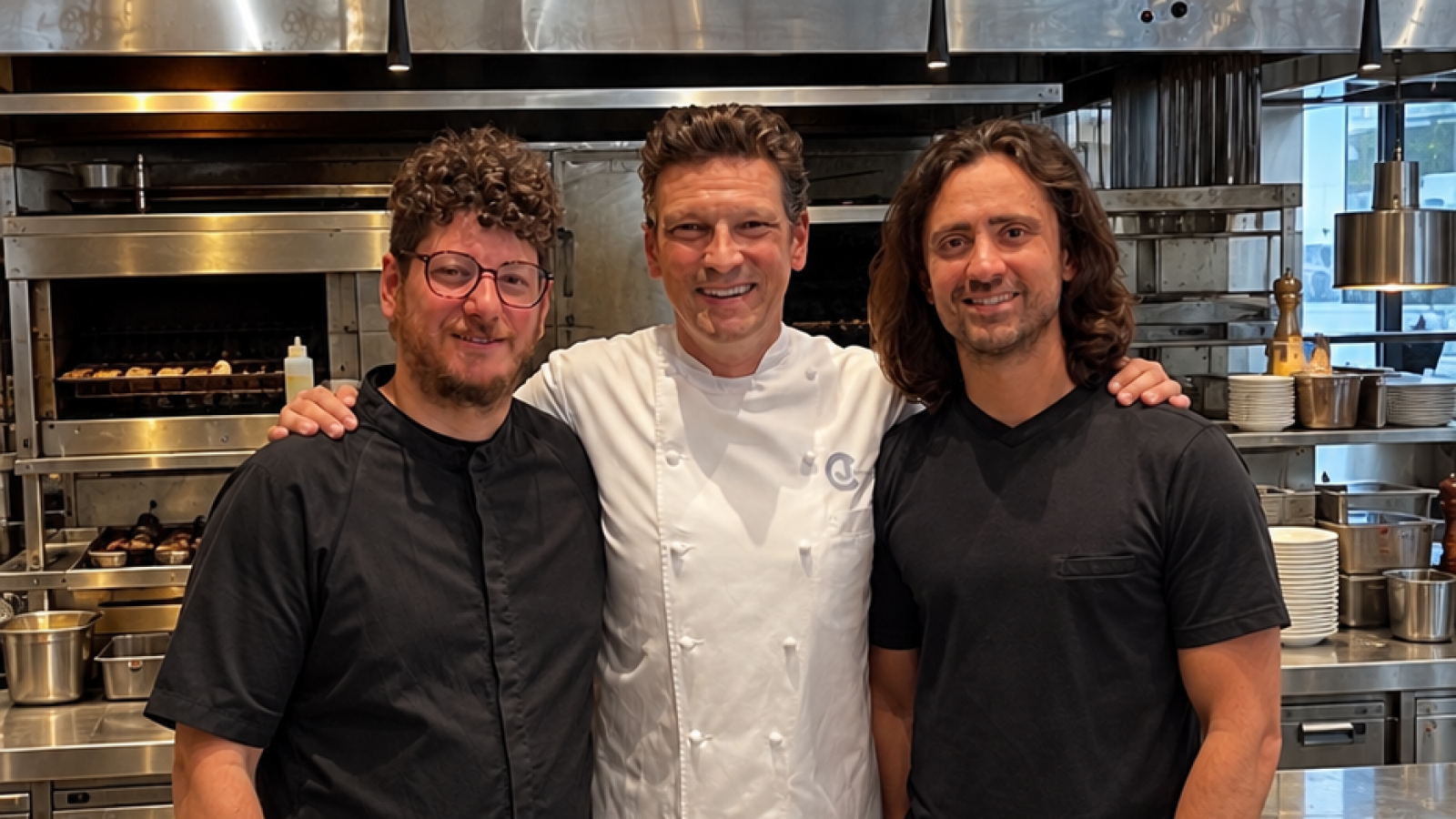
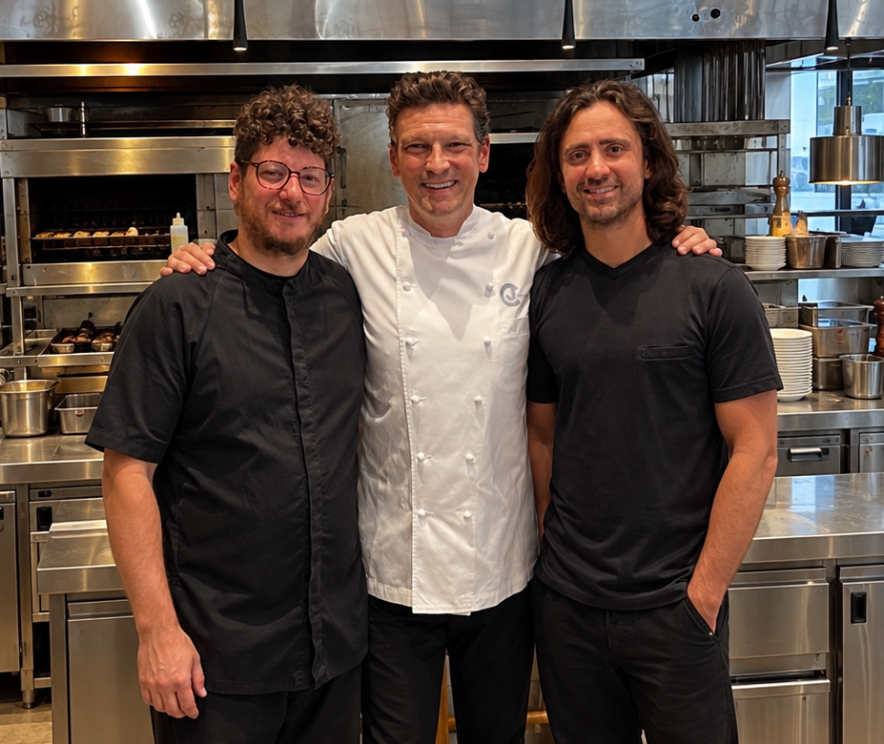
As soon as we stepped into Maestranza, the wood had just begun to burn. Its scent took us back to the village, to the days when our grandmother’s cooking began and ended over the fire and the aromas awakened your appetite long before you reached the table. Here on Ptolemaion Street, however, inside the open kitchen, they were not recreating a memory. Christian Jürgens and Pavlos Kyriakis were tasting the dishes to be served on 17 and 18 September.
To understand what this culinary encounter really means, we spoke separately with the three people who each have a different role in it: Kostas Papadopoulos, owner of Maestranza and host of the event; Pavlos Kyriakis, the restaurant’s chef; and Christian Jürgens, the guest chef. Each of them tells a different part of the story: why the invitation was made, how two distinct culinary approaches found a common language and what will eventually reach your table.
Who is three-Michelin-starred chef Christian Jürgens?
Christian Jürgens is 57 years old, lives in Bavaria and spent around fifteen years in the kitchen of Restaurant Überfahrt in Tegernsee. Under his culinary direction, the restaurant retained three Michelin stars for more than a decade, while his cuisine was awarded 19.5 out of 20 by Gault&Millau. Whenever he talks about that chapter of his career, he comes back to the team. He sees those distinctions as the result of the collective work of the people who stood beside him every day, both in the kitchen and in the dining room.
He first met Pavlos Kyriakis around two and a half years ago at a major culinary event in Amsterdam. A collaboration in Athens followed, and now they meet again in Thessaloniki, in a kitchen very different from the one in which the German chef built his career.
What made you think: this is the chef we want beside us at the fire?
For Kostas Papadopoulos, chef and owner of Maestranza, the choice came down to the way the German chef approaches his work: with persistence, precision and a determination to bring out the very best in every ingredient. As he tells us, Jürgens works “without fanfare, with simplicity, always wanting to draw one hundred per cent from the product”, constantly searching for the moment when an ingredient is at its best. His previous collaboration with Pavlos Kyriakis also played an important part. This invitation did not bring two strangers into the kitchen who first needed to get to know one another.
How did Christian Jürgens enter the world of Maestranza?
Christian Jürgens arrived at Maestranza as a guest. He began by asking what the people of the city enjoy eating: whether they prefer cold starters, salads, meat and flavours they recognise. Guided by those answers, he explored the market with the Maestranza team, searched for Greek ingredients and began adapting his ideas to a kitchen with a character of its own.
He spoke warmly about the people he met at Maestranza, the preparation that had taken place before his arrival and the team members who cooked and tasted alongside him from morning until late in the evening. For Jürgens, the real challenge is to make the guests happy, ensure that the collaboration works and leave the restaurant team feeling that these two days gave them something meaningful.
Fire brings depth, aroma and texture. The Maestranza kitchen works with a form of heat that cannot be adjusted with the turn of a switch. It demands constant attention, while the natural smokiness must add character without overpowering the ingredient. Precision determines how much of it each dish needs. This is where Jürgens’ experience of exacting technique meets the Maestranza team’s daily relationship with fire.
Which dish best brings together the two chefs’ different culinary approaches?
Pavlos Kyriakis describes two very different starting points. Jürgens comes from a world of exacting cuisine and carefully controlled temperatures. Maestranza relies on a more direct form of cooking, in which the chef must continuously read the flame. For Pavlos, however, a chef with Jürgens’ experience does not simply need to tame the fire. He can understand what it offers and incorporate its aroma, texture and natural smokiness into his own way of thinking.
Asked which dish expresses this meeting most clearly, Pavlos chooses the lamb chops. The idea began when Jürgens asked him what Greek diners enjoy eating. Lamb was a familiar answer, fire was already part of the restaurant’s identity and the guest chef worked with both in his own way, adding three different accompaniments.
What can we taste at Maestranza on 17 and 18 September?
For the menu, Christian Jürgens and Pavlos Kyriakis begin with familiar flavours and change the way they connect. The red Caesar is perhaps the clearest example. Green lettuce is replaced by bitter radicchio, the dressing is made with blackberries and Parmesan gives way to a mild Greek blue cheese. Purple potato crisps add crunch, while the salad is accompanied by octopus grilled over charcoal and lightly glazed with soy sauce.
The sea bream ceviche also follows the idea of the colour red. Watermelon, red onion and grapes accompany the fish. Jürgens had originally thought of using cherries, but when the team explained that they were no longer in season, he went to the market with them and replaced the cherries with grapes. It is a small change that reveals how he approaches seasonality: by tasting ingredients regularly and choosing them at their finest moment.
The lamb chops, a much-loved Greek dish, are cooked over the fire in the Jürgens–Kyriakis way, while dessert is deliberately kept as a surprise. Jürgens describes it only as a different interpretation of the memory of an ice cream sundae. The dishes from the four-hands dinner will be available à la carte, priced at approximately €10 to €25 each. You can simply choose whatever catches your eye, without committing to a set menu.
What exactly can you order from the menu?
Here is the full list, so you know what awaits you:
- Red “Caesar” salad with chicory, blackberries, beetroot, basil, Greek blue cheese and grilled octopus
- Summer sea bream ceviche with watermelon, grapes, red onions and herbs
- Lime-marinated prawns with yellow tomato broth, strawberries and lemon verbena
- Charcoal-grilled scallops with charred greens, avgolemono sauce and dill oil
- Charcoal-grilled chicken with black truffle beurre blanc and parsley
- The shepherd’s favourite: grilled lamb chops with chives, garlic, spicy tomatoes, soy tapioca, cucumber and herbs
- Deluxe ice cream sundae with lemon ice cream, exotic fruit salad, ginkgo cream, popcorn and lime
- Chocolate, caramel and vanilla ice cream
Four dishes are created by Christian and four by Pavlos.
What does Christian Jürgens think about fine dining and Michelin?
With all the discussion about whether “fine dining is dead”, we could not resist taking the conversation with Christian Jürgens beyond the dishes of the two-day event. When we asked him directly, his answer was unequivocal. He believes that the highest level of every profession will always have a place, provided that evolution is not treated as a superficial change. A kitchen needs time, consistency and serious thought if it is to become better.
“I don’t believe fine dining is dead, because good food will never die. It may change. It may return in a different form.”
Jürgens places diners, rather than chefs, at the heart of that change. Guests may not always want a five-hour meal or a rigid dining ritual. They still look for quality, intense flavours, surprise and an experience they will remember. The chef proposes, and the guest decides whether to follow it. He takes the same approach when speaking about the Michelin Guide.
“Michelin is not a guide for chefs. It is a guide for diners.”
He sees Michelin as a guide for restaurant guests, not as an instruction manual for chefs. Its stars indicate whether a restaurant is worth a stop, a detour or a journey; they do not tell the chef what to put on the plate. His view is particularly relevant to Thessaloniki at a time when the city is awaiting its inclusion in the Guide. Still, that does not turn this dinner into a Michelin rehearsal. As Jürgens explains, the true measure of success remains the person sitting at the table.
What will remain at Maestranza and in Thessaloniki after this culinary collaboration?
Pavlos Kyriakis believes that a collaboration like this can introduce the team to an ingredient it has never worked with before, a new combination or, more importantly, a different way of looking at something familiar. Every chef brings the flavours, aromas and experiences they grew up with. What remains is not necessarily a dish reproduced exactly as it was served, but the thought process that led to it.
The impact also extends to the way the city is seen. An international chef brings a personal audience, professional relationships and a career that gives the collaboration a reach beyond the boundaries of a local event.
“People outside the city may discover Thessaloniki through a chef.”
For Kostas Papadopoulos, the lesson for the team lies in Jürgens’ mindset: tasting an ingredient from the beginning to the end of its season, observing the moment when it reaches its best and allowing time to become an ally in the search for the desired result. As for the city, he wants something equally practical to remain:
“Diners should not be afraid of high gastronomy or automatically associate it with an unaffordable price.”
Why should all the big names go to Athens?
Kostas continues with a simple comparison: just as major concerts bring international names to Athens, Thessaloniki also needs to invite people from the international culinary scene. Especially now, as the arrival of the Michelin Guide opens a new chapter for the city’s gastronomy. He believes Thessaloniki already has an excellent food scene and that encounters like this can introduce it to a wider audience, inspire other restaurants to create similar events and strengthen gastronomic tourism.
There is no sponsor or external backer behind this particular event. What exists, as he tells us with a smile, is “culinary madness”: the desire to bring to Thessaloniki chefs whose work people would otherwise have to travel abroad to experience.
“It is the desire to make something happen in the city that would normally require its audience to travel.”
Editor’s note: By the time we left, the scent of burning wood had grown stronger. It was still that familiar scent of the village, only now it carried notes of radicchio, blue cheese and lamb, along with the ideas of two chefs who had met around the same fire.
P.S. Only a handful of seats remain for the dinner: Thursday at 10 pm and Friday at 7 pm.

KEEP READING
-
ΤΙ ΘΑ ΜΑΓΕΙΡΕΨΟΥΝ ΣΤΗ ΦΩΤΙΑ ΤΟΥ MAESTRANZA Ο 3-MICHELIN STAR GUEST CHEF CHRISTIAN JÜRGENS ΚΑΙ Ο 1-MICHELIN STAR ΠΑΥΛΟΣ ΚΥΡΙΑΚΗΣ
Μόλις μπήκαμε στο Maestranza, τα ξύλα είχαν αρχίσει να καίγονται. Η μυρωδιά τους μας γύρισε στο χωριό, τότε που το φαγητό της γιαγιάς άρχιζε...
16 Σεπτεμβρίου -
Ο ΑΝΔΡΕΑΣ ΦΙΟΡΕΝΤΙΝΟΣ ΑΠΑΝΤΑ ΓΙΑ ΤΟ ΠΟΤΕ ΑΝΑΚΟΙΝΩΝΟΝΤΑΙ ΟΙ ΔΙΑΚΡΙΣΕΙΣ ΤΟΥ MICHELIN GUIDE
Αν ζεις από κοντά την εστίαση της Θεσσαλονίκης, γνωρίζεις πόσο συχνά επιστρέφει η ίδια συζήτηση. Η πόλη έχει μαγειρική ταυτότητα, chefs με ...
13 Σεπτεμβρίου -
ΔΗΜΗΤΡΗΣ ΤΑΣΙΟΥΛΑΣ: Η ΘΕΣΣΑΛΟΝΙΚΗ ΕΧΕΙ FINE DINING. ΑΠΛΩΣ ΝΤΡΕΠΟΜΑΣΤΕ ΝΑ ΤΟ ΠΟΥΜΕ.
«Αν κλείσεις τα μάτια, είναι μουσακάς. Αν τα ανοίξεις, πάλι είναι μουσακάς». Ο Δημήτρης Τασιούλας χρησιμοποιεί ένα από τα πιο αναγνωρίσιμα ...
09 Σεπτεμβρίου

 VIEW MORE